
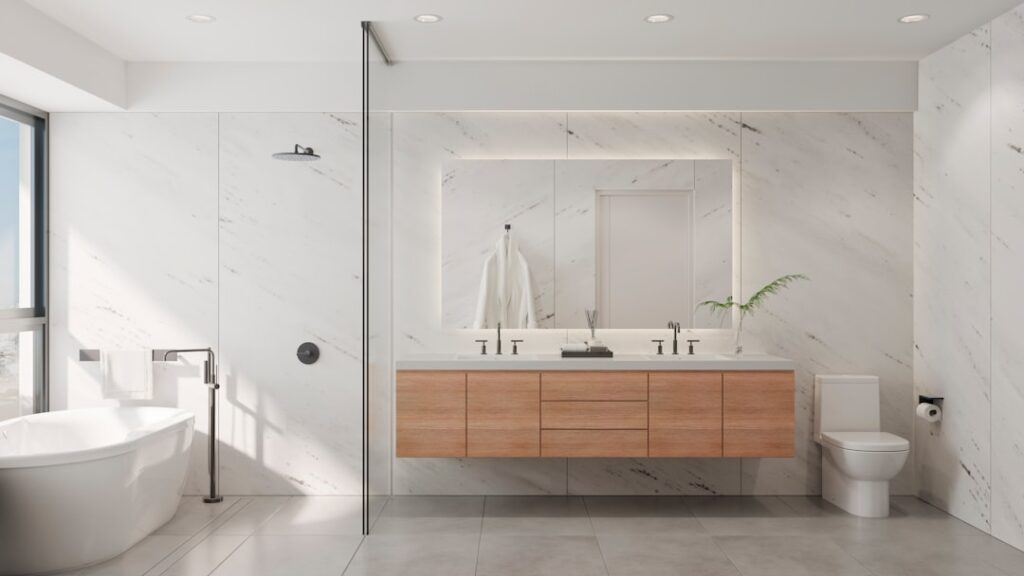

There’s a persistent myth that accessible bathrooms have to look plain or institutional. That’s outdated thinking. Today’s designs feature attractive options like vanities with open space beneath to accommodate wheelchairs, curbless showers that eliminate barriers, and layered lighting that brightens the room without glare. Grab bars no longer have to be an eyesore; they can be installed using finishes and placements that blend with the overall decor. An experienced designer will integrate these elements discreetly, avoiding the appearance of retrofitting.
Concerns about time and cost often deter people from accessible renovations. While some adaptations require planning, they don’t necessarily mean higher expenses or long waits. For example, widening a doorway by a few inches and swapping slick tile for textured slip-resistant flooring are upgrades that can be done relatively quickly if the layout allows. Many homeowners are surprised to learn that these changes can add value to their property and improve daily living comfort without breaking the bank.
Choosing the right materials is another area where knowledge matters. Bathrooms face constant moisture, so waterproofing remains a priority. Durable tiles with textured surfaces reduce slipping risks while offering visual appeal. Low-threshold shower bases allow smoother entry and exit without bulkiness typical of older designs. Selecting fixtures with lever handles rather than knobs makes operation easier for people with limited hand strength or arthritis, a detail often overlooked until after installation.
Starting a renovation involves clear communication between homeowner and contractor. First, the specific needs must be identified, whether it’s extra clearance around the toilet for transfers or easy-to-reach storage shelves. Contractors should ask questions about daily routines and any physical limitations to tailor solutions effectively. One practical step is reviewing the local building codes related to accessibility early on to avoid surprises during inspections. Frequent site visits and updates help catch issues before they cause delays or costly rework.
Transparency throughout the project sets apart good renovation providers. Homeowners deserve regular progress reports and early warnings about any obstacles encountered. This openness builds trust and allows adjustments as needed before work moves too far ahead. A common frustration is discovering features installed in inconvenient locations because of miscommunication; staying involved helps prevent that. Keeping a written record of decisions made during the process also avoids confusion later.
Visual examples often inspire homeowners considering accessible upgrades. Many companies maintain galleries showcasing previous projects where style meets function. Seeing how spacious layouts coexist with elegant design can change preconceived ideas about accessibility. It’s useful to ask contractors for references or to visit completed sites when possible, offering a real sense of what is achievable within your budget and space constraints.
Interest in accessible bathroom renovations is growing as more people recognize the benefits of inclusive design. Updating your bathroom to suit current needs can also boost your home’s overall appeal and marketability. This trend reflects a broader awareness that homes should accommodate different abilities comfortably and attractively.
In regions like the Greater Toronto Area, access to knowledgeable professionals makes it easier to plan and execute these renovations. Finding contractors who understand both the technical aspects and everyday realities of accessibility matters. Reaching out early in the planning phase ensures your vision aligns with practical solutions. You might consider contacting those who provide full services from initial consultation through final installation to keep everything coordinated smoothly and reduce stress during the renovation process. bathroom renovation guidance in gta