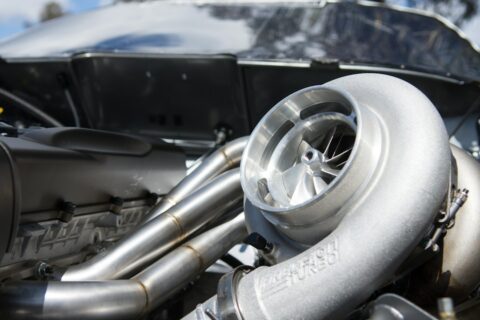
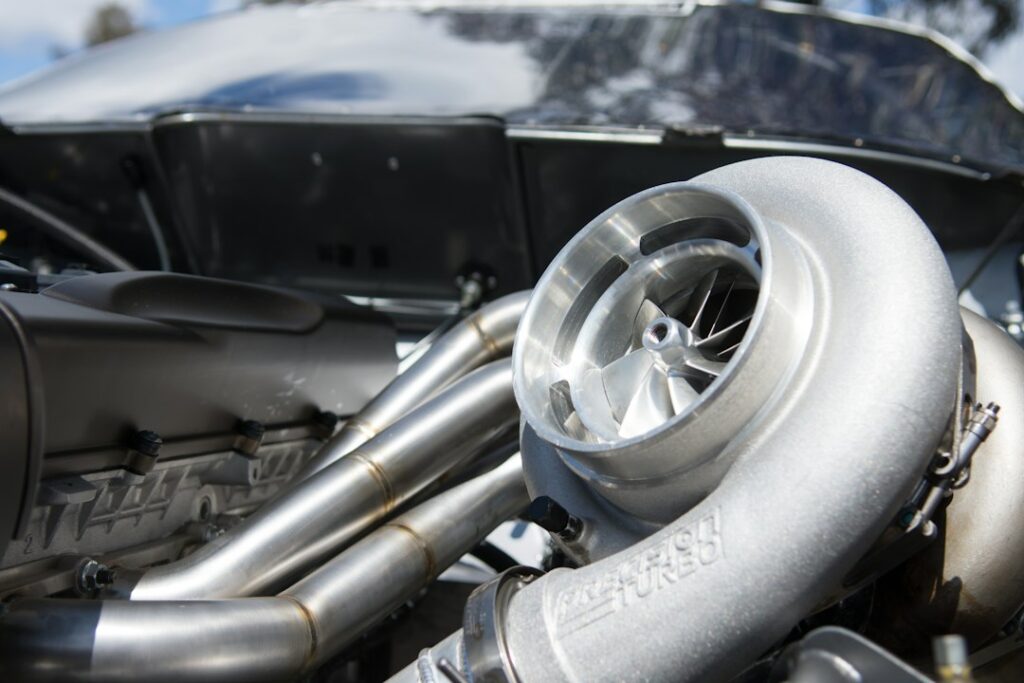

Turbo sizing starts with the engine’s airflow requirement rather than the largest compressor wheel available. The compressor supplies air, while the turbine extracts energy from exhaust flow to drive it, so the two sides must suit each other. An undersized unit can respond quickly yet create excessive backpressure near redline. An oversized unit may support the target power but feel dull in ordinary driving. Compare compressor maps, turbine wheel options, and housing sizes before choosing among HPT Turbos or a Garrett G Series II application. The useful question is where the turbo operates efficiently, not which name sounds most impressive.
Turbine housing selection has a direct effect on how the car feels. The A/R ratio relates the housing’s internal area to the passage length around the turbine. A smaller ratio generally increases gas velocity at the wheel and can improve early response, while a larger ratio may reduce restriction as exhaust volume rises. Neither option works for every engine. A heavy street car with a mild cam may favor quicker boost, whereas a high-rpm track engine may need the breathing room of a larger housing. Displacement, cam timing, gearing, boost pressure, and exhaust manifold design belong in the same decision.
Installation details deserve attention before the first start. Flush the oil feed line, use fittings suited to the turbocharger, and route the drain downhill into the engine with no sharp kink or narrow restriction. The drain depends on gravity, so it cannot overcome a pressurized crankcase or a poor return path. Read the manufacturer’s oiling instructions and prime the bearing housing with clean oil before cranking. A practical habit is to photograph each hose connection before covering it with heat shielding. Disable ignition or fuel long enough to build oil pressure, then inspect every clamp, plug, and gasket while access is still easy.
Boost control should be checked as carefully as the compressor choice. The wastegate diverts exhaust around the turbine, and its actuator needs a stable pressure signal from the correct source. A split hose, wrong port, or unsuitable spring can let boost exceed the level expected by the calibration. A boost leak creates a different symptom: the turbo works harder while pressurized air escapes from the intake system. Smoke-test the charge tract, inspect intercooler couplers, and verify the blow-off valve. Do not increase controller duty to conceal a leak. Fix the mechanical fault, then reset the control strategy and test again.
A 2.0-liter street car that feels strong below 3,500 rpm but runs out of airflow near 6,500 rpm may benefit from more upper-range capacity, but a larger turbo alone can make the car less responsive. Log boost, air-fuel ratio, ignition timing, intake temperature, and engine speed during repeatable pulls. Intake temperature shows how much the compressed charge has heated, which affects density and knock margin. Save the dyno file or datalog with the fuel, boost setting, and ambient conditions written in the file name. Several consistent runs reveal more than one flattering graph or a single peak boost number.
Routine inspection can catch problems before they damage the turbocharger. Check for oil seepage, loose fasteners, damaged compressor blades, unusual smoke, and changes in shaft movement. Some journal-bearing designs can show limited movement before oil pressure stabilizes, so compare findings with the specific service guidance instead of judging by feel alone. Keep the air filter sealed and replace it when restricted, since debris can quickly damage the compressor. Let oil reach operating temperature before sustained load, and allow a sensible cooldown afterward. Manufacturer documentation and turbocharger setup information should guide final oiling, control, and service decisions.